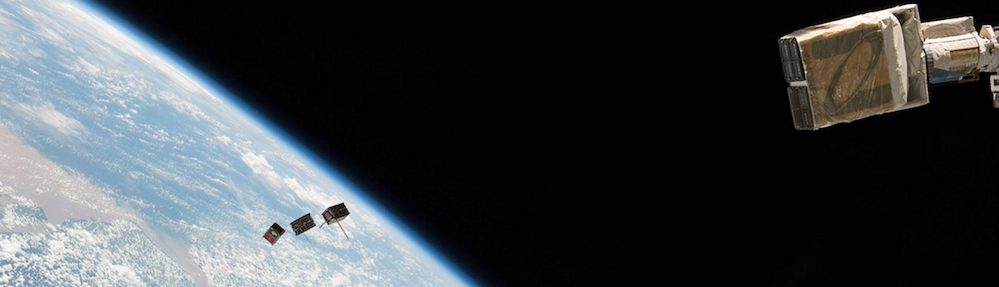
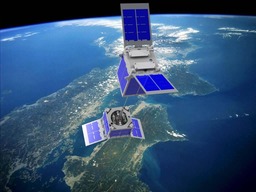
 The amateur radio satellite STARS-II is being developed by students at Kagawa University and consists of Mother satellite and Daughter satellite connected by tether.
STARS stands for Space Tethered Autonomous Robotic Satellite.
The mission will include formation flight, tether deployment, attitude control and the mother and daughter satellites will take pictures of each other.
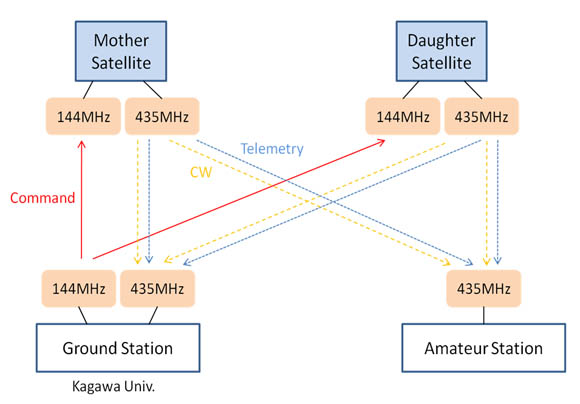
It is porposed to fly a 80mW CW beacon and a 800mW AX25 1200bps telemetry downlink. Total mass is 8 kg.
Coordinated frequencies for CW 437.245 MHz (mother) and 437.255 MHz (daughter). FM downlinks 437.405 MHz (mother) and 437.425 MHz (daughter).
Communication Link:
Kagawa satellite development project STARS-II webpage