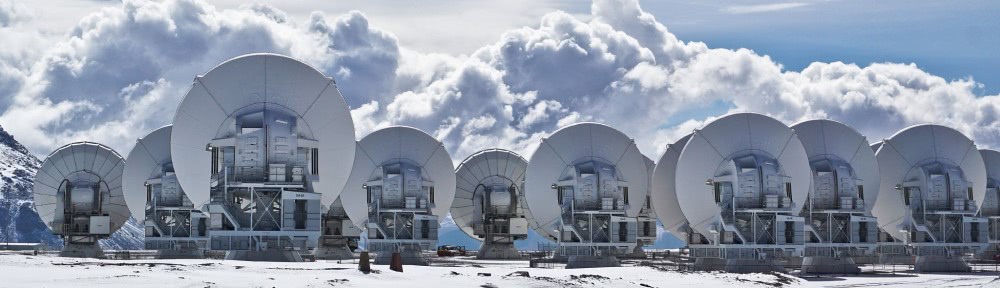
Artemis-II

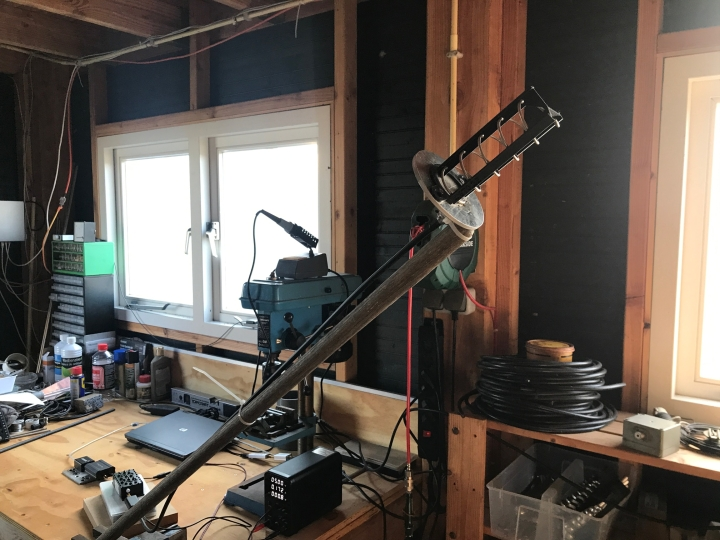
Lessons learned from the Blue Ghost mission, you don’t need very high-end equipment to receive signals from missions to the moon. This time we used an old 60cm TV offset dish where we placed a 5 turn LHCP helix in the feed point.
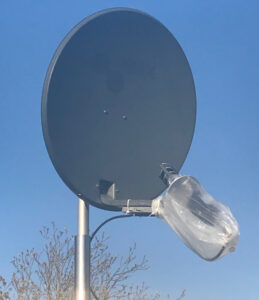
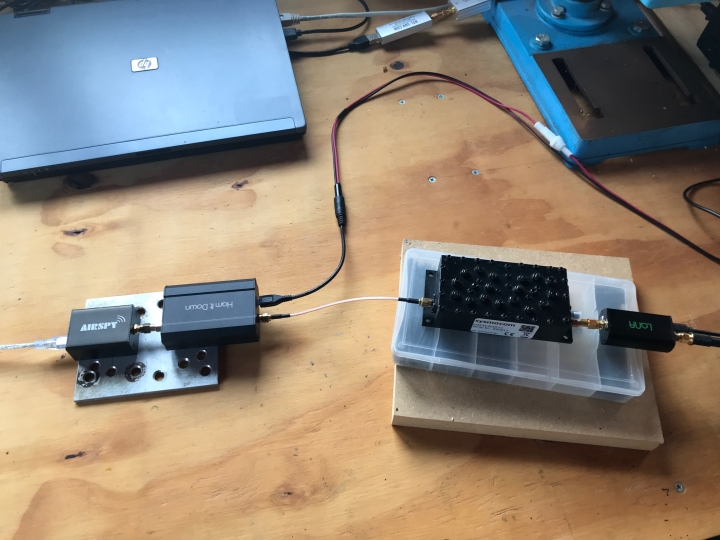
The full RF path is as follows: 5 turn LHCP Helix → Osmocom S-band bandpass filter → NooElec wideband LNA → 4 meter Aircell 7 → BiasT → USRP B200 mini.

With the help of Nasa Horizons we could determine the location where to point the dish so Artemis-II would pass the beam of the antenna. This first night we used a the following fixed position, 195 Azimuth and 8 Elevation.

After some initial tests with the great STRF tools we where sure the setup was receiving signals and now the waiting began. It would be a long night.

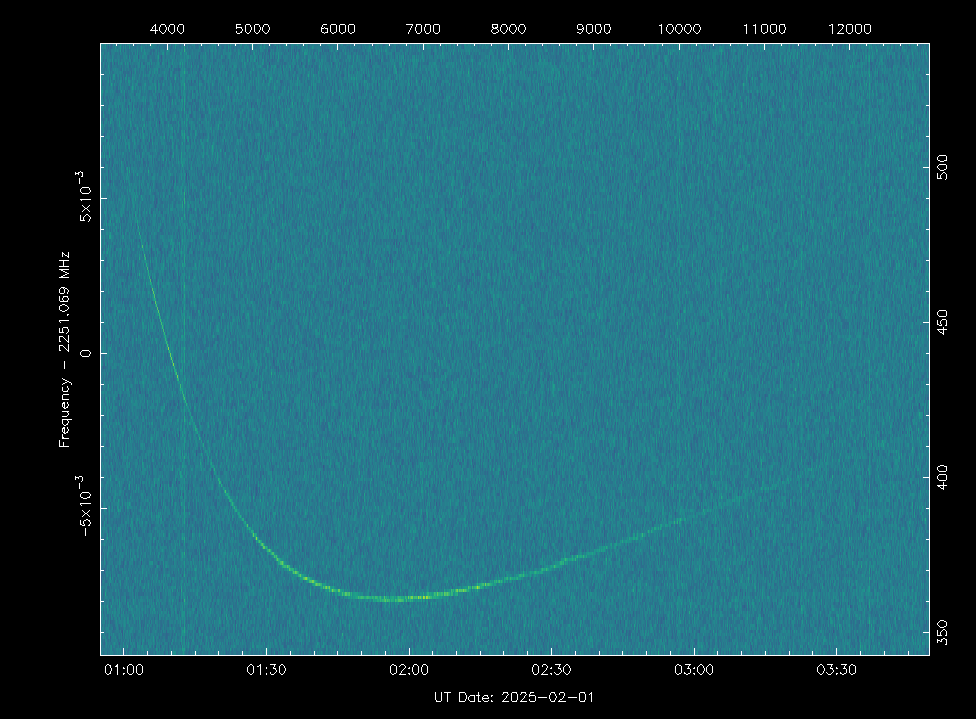
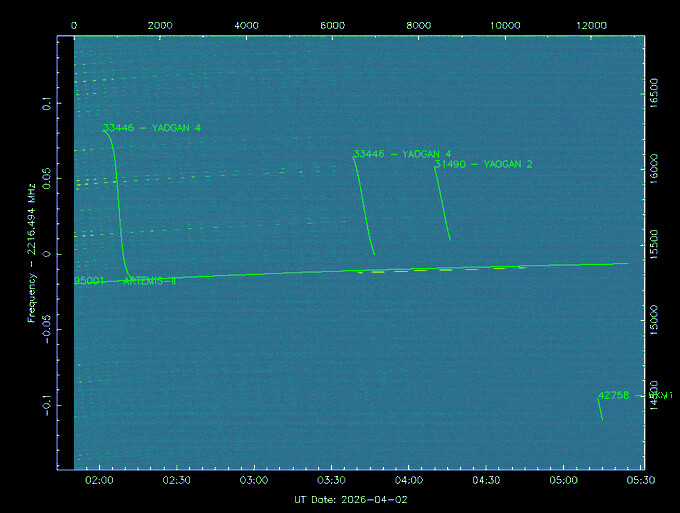
But finally around 01:30 a very strong wide band signal (+/- 5MHz) was detected and I could even receive it on this small setup. Around 02:00 (04:00 local) it was time to get some sleep and we let the observation running. This morning we saw that around 03:30 we could see a residual carrier, see the below rfplot.
Sources:
STRF at github.
NASA Horizons.

Blue Ghost reception

Blue Ghost Mission 1 to the Moon.

Would it be possible with a minimal setup to receive signals from this mission to the Moon.

With the help of @eelkevisser I was finally able the receive Blue Ghost. A 5 turn LHCP helix on a broomstick (Blue Ghost used LHCP) into a Nooelec wide-band LNA, sysmocom S-band filter, Nooelec down converter and Airspy R2. Pretty awesome.

The antenna was pointed at a fixed location and I used the STRF tools to record the signals over a long period when the satellite was passing.

Doppler measurement:

Blue Ghost 1 Doppler curve

Source: Blue Ghost Mission 1

Gauss Srl

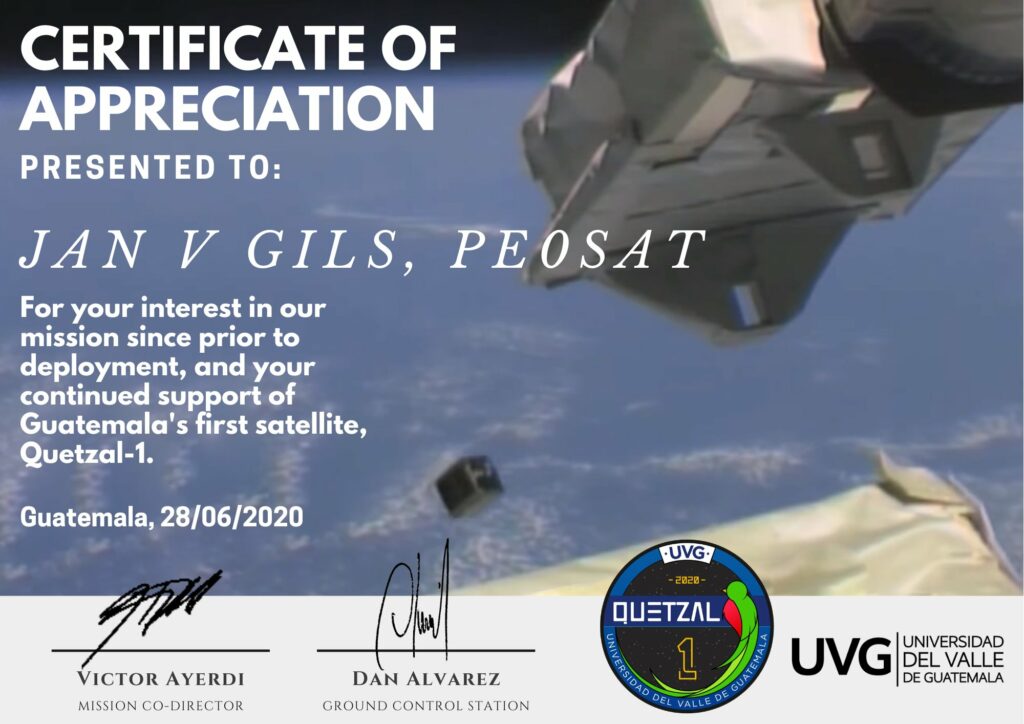
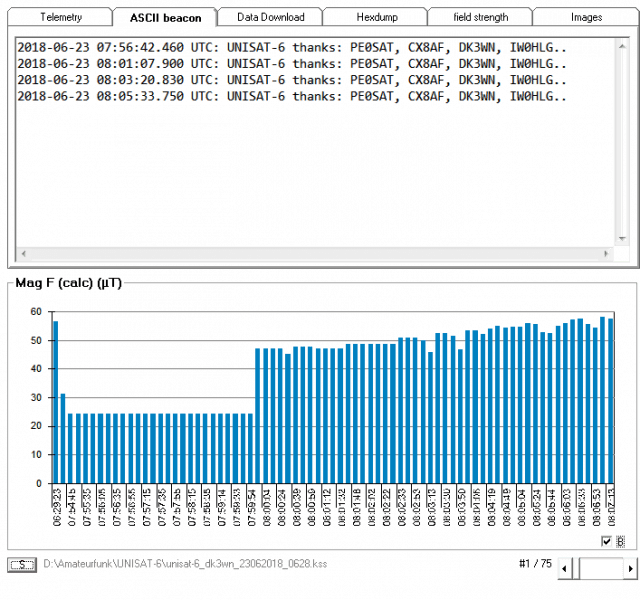
Dear HAM Community, a QSL Card is a great achievement but what about being thanked directly by a satellite? In a few days, UniSat-6 will thank each radioamateur and enthusiast who has been tracking it during these years. Stay tuned!!

Data received by DK3WN.

An open letter

This isn’t the first time this topic is brought to our attention but after reading this call I felt obliged to share one of the important parts and a link to the original posting.

Original quote:

“According to the ITU Radio Regulations for the Amateur and Amateur-satellite Services, “Transmissions between amateur stations of different countries shall not be encoded for the purpose of obscuring their meaning, except for control signals exchanged between earth command stations and space stations in the amateur-satellite service.” A strict interpretation of this rule means that the specifications of all digital protocols used by Amateur stations should be publicly available, so that anyone is able decode the data. The use of protocols with undisclosed specifications can be seen as a try to obscure the meaning of the data.”

Source: By Dr. Daniel Estévez, an open letter about ESEO telemetry specifications.