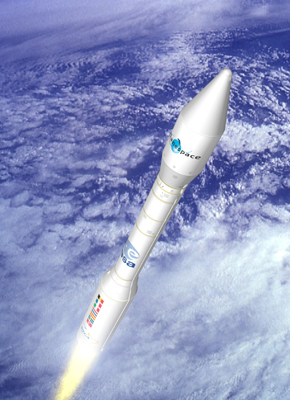
 The first student built amateur radio CubeSats to be sponsored by ESA’s Education Office have passed their Final Acceptance Review and have been declared ready for launch on board the maiden flight of Vega, the new ESA launcher.
The launch window for this historic lift-off opens on 26 January and ends in the first week of February 2012.
The seven university-built picosatellites, each weighing only 1 kilogram, were integrated with the devices that will carry them during launch – the P-PODs, or Poly-Picosatellite Orbital Deployers – between late October and mid November. Before they could be cleared for launch, they had to pass a detailed technical examination known as the Final Acceptance Review.
The single-unit CubeSats, whose development represented a highly valuable, if not unique hands-on learning experience for the university students that were involved – were developed by teams from 6 different European countries:
- Xatcobeo (a collaboration of the University of Vigo and INTA, Spain)
- Robusta (University of Montpellier 2, France)
- E-St@r (Politecnico di Torino, Italy)
- Goliat (University of Bucharest, Romania)
- PW-Sat (Warsaw University of Technology, Poland)
- MaSat-1 (Budapest University of Technology & Economics, Hungary)
- UniCubeSat GG (Universitá di Roma ‘La Sapienza’, Italy)
- As well as the CubeSats Vega will also carry the Amateur Radio microsatellite ALMASat-1
Frequencies and links for the satellites can be found in the following article from JE9PEL.
Read the article of the full ESA story.