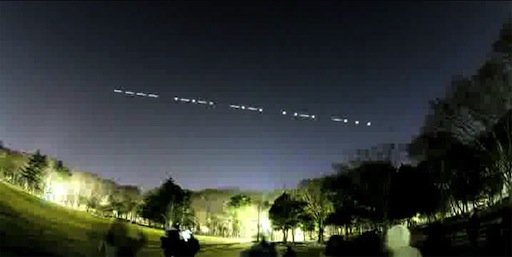
FITSAT-1 led experiment on Christmas Eve. The led experiment comprising a bank of high power LEDs that will be driven with 200W pulses to produce extremely bright flashes that may be visible to the unaided eye of observers on Earth. … Continue reading →
Close-up image captured by NASA’s Solar Dynamics Observatory (SDO) shows the July 6, 2012 X-class flare captured in the 171 Angstrom wavelength. Credit: NASA/SDO/AIA
SigintOS Also for HAM Radio enthusiasts SigintOS can be a way to get acquainted with the Linux operating systems and SDR radios. SigintOS; as the name suggests, SIGINT is an improved Linux distribution for Signal Intelligence. This distribution is based … Continue reading →
IQ Data Explained This is a description of using I/Q Data (aka “analytic signal”) representing a signal. Since the topic may be quite confusing, I’ve described the same thing here from different point of views. If you find the information … Continue reading →
UniSat-6 GAUSS (La Sapienza University of Rome) Mission The satellite is built in 50cm x 50cm x50cm box-shape bus, optimized for piggy-back launch. All instruments are powered by solar cells mounted on the spacecraft body, with maximal electrical power of … Continue reading →
Software update in Space This week we successfully updated the flight software on the On-Board-Computer (OBC) of UWE-3. The redundant OBC of UWE-3 is capable to receive, store and flash software-updates while the satellite itself stays fully functional. After transmitting … Continue reading →