Initial Cubesat TLE data for AubieSat-1, E1P-U2, M-Cubed, RAX-2 and DICE
AubieSat-1
1 99994U 00000    11301.47661542 0.00000000  00000-0  00000-0 0  0004
2 99994 101.6484 233.3593 0253027 295.2632 199.6027 14.79026571000008
E1P-U2
1 99995U 00000    11301.47661542 0.00000000  00000-0  00000-0 0  0005
2 99995 101.6483 233.3593 0252986 295.2628 199.6029 14.79017909000003
M-Cubed
1 99996U 00000    11301.47661542 0.00000000  00000-0  00000-0 0  0006
2 99996 101.6483 233.3593 0252943 295.2624 199.6032 14.79009197000007
RAX-2
1 99997U 00000    11301.47777282 0.00000000  00000-0  00000-0 0  0006
2 99997 101.6434 233.3640 0249216 295.6962 205.2960 14.78420752000002
DICE-F
1 99998U 00000    11301.47893023 0.00000000  00000-0  00000-0 0  0009
2 99998 101.6485 233.3603 0247816 295.0284 212.1452 14.77853717000006
DICE-Y
1 99999U 00000    11301.47893023 0.00000000  00000-0  00000-0 0  0000
2 99999 101.6484 233.3604 0247744 295.0246 212.1487 14.77838475000007
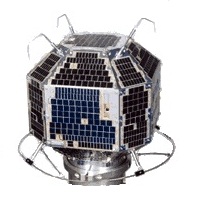 Information has been received that the FO-29 analog repeater is currently off the air. The eclipse periods have increased to the point exceeding 27% shadowing which causes an undervoltage fault to shut down the satellite.
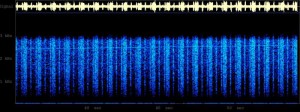 This is one of the spectrograms that I have made the last couple of days, but no idea if it is from prospero. We will try again the next couple of days. Downlink frequentie 137.560 MHz and PCM modulated signal.
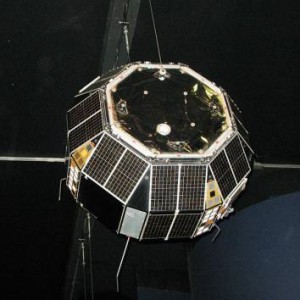 A team in the UK are trying to re-contact an old British launched satellite for the anniversary of its launch (28th October 1971). We’ve been given a licence to transmit and will be testing our re-engineered ground-segment in the next fortnight. The passes we are going to concentrate on will be as far out west as possible, as to minimise QRM from Europe.