
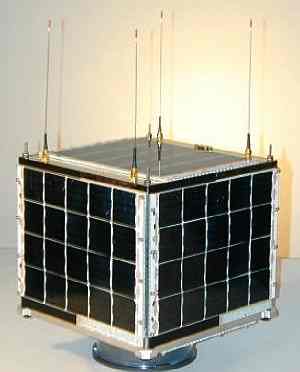
 AO-51 Command Stations report that the seven year old spacecraft is now shutting down its transmitter after losing sunlight on its solar panels during eclipse periods. Two of the six battery cells are now dead. Since July 31, 2010 AO-51 has maintained continuous and stable operations due to careful tuning of its power settings.
The AO-51 Operations Team reported on November 25 that the on-board computer (IHU) crashed between 1815 and 1945Z due to low voltage. This happened after a few days of intermittent and unpredictable operation.
AO-51 Control Operators Mark Hammond, N8MH and Drew Glasbrenner, KO4MA reset the satellite and started the repeater back up around ~2030Z. Satellite operation was set to the following:
Uplink: 145.880, no PL tone required
Downlink: 435.150 at about 300 milliwatts
 Drew reported that telemetry data showed the battery voltage was low, around 4.9v, with cell 1 less than 1 volt. The impending third cell failure will likely end continuing operations, particularly if it fails shorted as the others have. At present there remains little margin as the operations team has observed the transmitters cutting off around 4.7 to 4.6 volts prior to the last reset, in eclipse.
Please submit your AO-51 reports to the OSCAR Status Web Page: http://oscar.dcarr.org. The command stations monitor this for changes in the operation. While worldwide participation is good, more reports from US operators are appreciated.
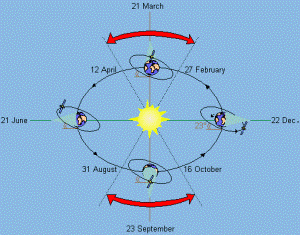
Eclipse periods, which are expected to reach 30 minutes by the end of 2011, are causing AO-51 to shut itself OFF due to low voltage.
Please support AMSAT-NA and the other AMSAT groups around the world, and help us get new satellites into orbit. Projects like Fox, FunCube, P3E, and Kiwisat need your financial support to keep our amateur satellite fleet flying.
You can keep up with the latest AO-51 Command Team news at:
http://www.amsat.org/amsat-new/echo/CTNews.php
Source: Amsat NA
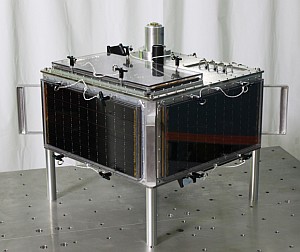 A reminder that if you have been putting off working through the ARISSat-1 repeater, receiving SSTV pictures, or submitting telemetry, the next few weeks will be your last opportunity to be a part of this satellite’s history. Since deployment in August, ARISSat-1 has descended about 60 km, and is currently losing more than 1.5 km per day. The rapid rate is partially the result of the recent solar activity on the atmosphere, significantly increasing the drag. The predictions by several individuals and groups are all converging toward a reentry in January or February, 2012. Heating will become significant before then. Remember, good telemetry in this period provides invaluable information to the engineering team, to be used in future projects.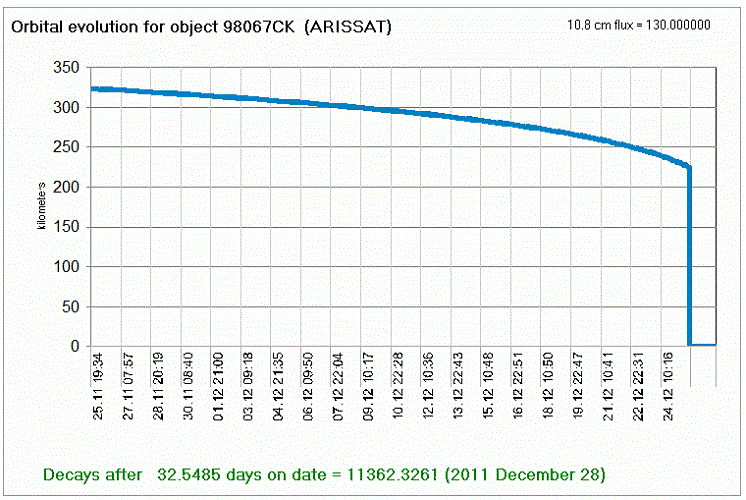
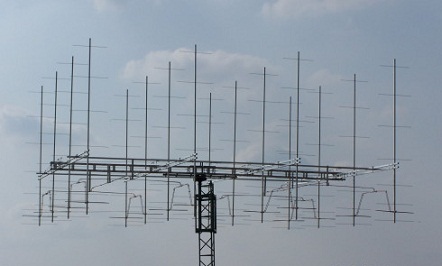
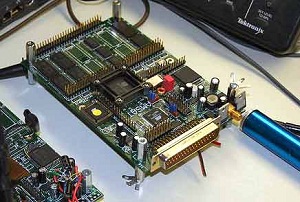 AMSAT-NA VP Operations Drew Glasbrenner KO4MA reports on Friday’s IHU crash on the Amateur Radio satellite AO-51. Sometime between 1815 and 1945Z November 25, AO-51′s IHU crashed. This happened after a few days of intermittent and unpredictable operation.
 AMSAT submitted a proposal to NASA for their CubeSat Launch Initiative, also known as the ‘Educational Launch of NanoSat’ (
 Hot off the press – Lecture Cubesats Veron Breda (R07)
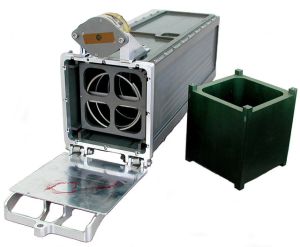 universities worldwide to perform space science and exploration. Since CubeSats are all 10×10 cm (regardless of length) they can all be launched and deployed using a common deployment system. CubeSats are typically launched and deployed from a mechanism called a Poly-PicoSatellite Orbital Deployer (P-POD), also developed and built by Cal Poly. P-PODs are mounted to a launch vehicle and carry CubeSats into orbit and deploy them once the proper signal is received from the launch vehicle. P-PODs have deployed over 90% of all CubeSats launched to date (including un-successful launches), and 100% of all CubeSats launched since 2006.